
Tongue Tie & Chiropractic in Pasadena, CA
Watching your baby struggle to feed is one of the most stressful experiences a new parent can face. When every nursing session becomes a battle — painful for you, frustrating for your baby — you start searching for answers. And for many families, that search eventually leads to a tongue tie diagnosis.
At Innate Family Chiropractic, we provide gentle chiropractic support for babies with tongue tie, both before and after a release procedure. Dr. Chris and Dr. Adana are both ICPA certified and have worked with numerous tongue tie cases — and as parents who navigated their own daughter's latch challenges, they understand this journey personally.
What Is Tongue Tie?

Tongue tie, medically known as ankyloglossia, occurs when the thin band of tissue (the frenulum) connecting the underside of the tongue to the floor of the mouth is unusually short, thick, or tight. This restricts the tongue's range of motion and can significantly affect how a baby feeds.
Lip tie is a related condition where the frenulum connecting the upper lip to the gum is similarly restrictive. Both conditions can occur together and compound feeding difficulties.
Tongue ties are classified by type (Type 1 through Type 4), with posterior ties being subtler and often harder to identify. The condition can affect breastfeeding, bottle-feeding, speech development, oral function, and even jaw and facial development over time. While tongue tie is a tissue restriction present at birth, prenatal chiropractic care supports optimal fetal positioning and a more balanced delivery — which can reduce some of the cranial and cervical tension patterns that often accompany tongue tie cases.
Signs Your Baby May Have a Tongue Tie

Parents often notice the symptoms before they have a name for them. Common signs include difficulty latching or maintaining a latch during breastfeeding, clicking sounds during feeding, excessive gassiness or fussiness during and after feeds, poor weight gain or slow growth, milk leaking from the corners of the mouth, a flattened or misshapen nipple after nursing, and visible restriction when baby tries to extend the tongue.
If any of these sound familiar, it's worth having your baby evaluated by a provider experienced with tethered oral tissues.
The Role of Chiropractic in Tongue Tie Support
A tongue tie isn't just a tissue issue. Babies with tongue ties almost always develop compensatory tension patterns throughout the jaw, cranium, and cervical spine. In order to feed despite a restricted tongue, the baby's muscles and joints adapt — creating tightness that further complicates feeding mechanics.
Chiropractic care addresses these structural tension patterns. Through gentle cranial, cervical, and jaw-specific adjustments, Dr. Chris and Dr. Adana help release the tightness that has built up around the restriction. This can improve jaw mobility, reduce cranial tension, and support better overall oral function.
When the body is holding tension, even a successful release procedure may not fully resolve feeding difficulties — because the compensatory patterns remain. That's why chiropractic plays such an important role in the complete picture.
Before and After a Release — How Chiropractic Helps
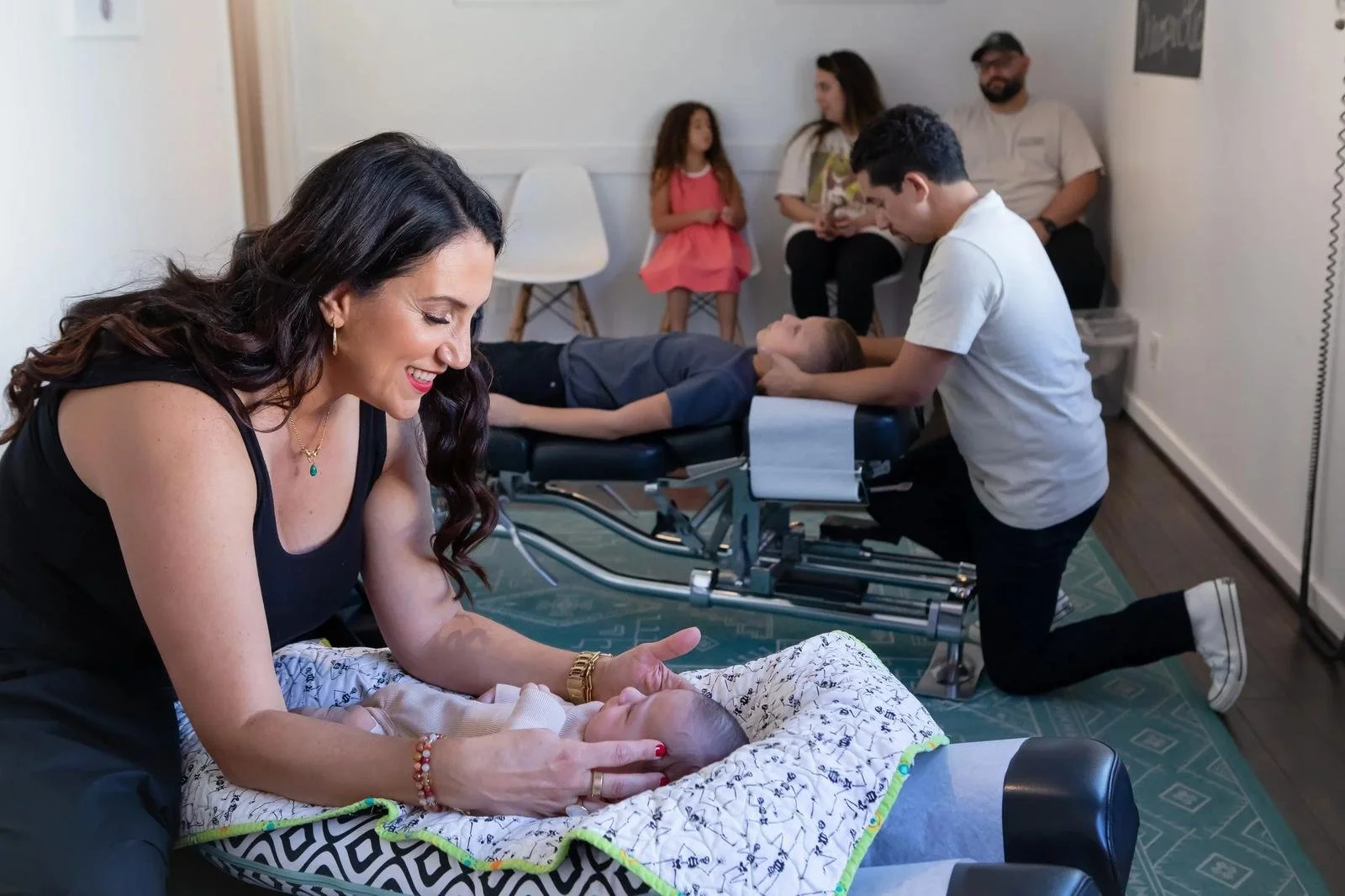
Before a release
Chiropractic care prepares your baby's body by addressing the tension patterns that have developed around the restriction. This means the muscles and joints are in a better position to function optimally once the tie is released.
After a release
The frenulum has been released, but the body needs to relearn how to use the tongue and jaw without the old restrictions. Chiropractic adjustments support this neurological and structural retraining, helping your baby adapt to their new range of motion more quickly and completely.
Many families see the best feeding outcomes when chiropractic care is combined with the release procedure and support from a lactation consultant.
For more on what to expect from this kind of care in the early weeks, our gentle chiropractic care for your newborn post walks through wellness tips, signs to watch for, and how chiropractic supports your baby's overall development.
Our Collaborative Approach
We believe in working alongside your baby's full care team. That means coordinating with the provider performing the release — whether a pediatric dentist, ENT, or oral surgeon — as well as your lactation consultant and pediatrician. Each provider addresses a different piece of the puzzle, and collaboration produces the best results.
If your baby hasn't yet been evaluated for tongue tie, we can help assess whether a referral might be appropriate based on what we observe during the chiropractic evaluation.
Frequently Asked Questions
-
Chiropractic addresses the compensatory tension that develops in the jaw, cranium, and cervical spine as a result of restricted tongue movement. By releasing this tension, feeding mechanics improve — often significantly.
-
Ideally, yes. Pre-release chiropractic care helps reduce the structural tension that has built up, which prepares the body to function more effectively after the tie is cut. Many providers recommend several chiropractic sessions before the release.
-
Difficulty latching, clicking during feeds, excessive gassiness, poor weight gain, and a flattened nipple shape after nursing are all common signs. Posterior tongue ties can be harder to spot and may require evaluation by an experienced provider.
-
Yes. After a release, babies need to relearn how to use their tongue and jaw with the new range of motion. Chiropractic adjustments support this process by ensuring the cranial, cervical, and jaw structures are aligned and free from tension.