
Infant & Newborn Chiropractor in Pasadena, CA
The journey from womb to world is the most physically intense experience of your baby's life. Even the most straightforward delivery places significant force on your newborn's spine and cranium — and when birth involves vacuum extraction, forceps, prolonged labor, or cesarean section, that physical stress increases.
At Innate Family Chiropractic, we provide gentle, neurologically-focused pediatric chiropractic care for newborns and infants in Pasadena. Dr. Chris and Dr. Adana are both ICPA certified and have been caring for babies since 2010. Dr. Adana adjusted their own daughter just six hours after birth — because they understood that the earliest days are some of the most important.
Why Newborns Benefit From Chiropractic

Your baby's nervous system is developing at an extraordinary pace in the first year of life. Neural pathways are forming, reflexes are organizing, and the body is learning to regulate basic functions like feeding, sleeping, digestion, and immune response.
When the birth process creates misalignment — even subtle misalignment — in the upper cervical spine or cranium, it can interfere with how the nervous system communicates. This interference doesn't always present as obvious pain. In infants, it often shows up as difficulty latching or breastfeeding, excessive fussiness or crying, poor sleep patterns, digestive discomfort like reflux or gas, a head that consistently tilts to one side, and tension or arching in the body.
These signs don't mean something is seriously wrong. They often mean the nervous system is under stress and needs support.
Birth Trauma and the Nervous System

The term "birth trauma" doesn't necessarily mean a traumatic birth. It refers to the physical forces that any delivery places on your baby's body — particularly the cervical spine and cranial base.
Interventions like vacuum or forceps delivery, prolonged pushing, emergency or planned C-section, and rapid labor all increase the physical stress on the infant's spine. Even a straightforward vaginal delivery involves significant compressive and rotational forces on the baby's head and neck.
These forces can cause subtle vertebral misalignments — subluxations — that create nervous system interference in the days and weeks that follow.
What We Look For in Your Baby
During your baby's assessment, Dr. Chris or Dr. Adana will evaluate spinal alignment, particularly in the upper cervical area, cranial symmetry and any indicators of molding or compression, muscle tone and tension patterns, feeding mechanics and head positioning, and neurological function through INSiGHT scanning, which is completely painless and safe for newborns.
We're looking for signs that the nervous system is under stress — and we often find them in babies whose parents had no idea anything was off.
How Gentle Is a Baby's Adjustment?
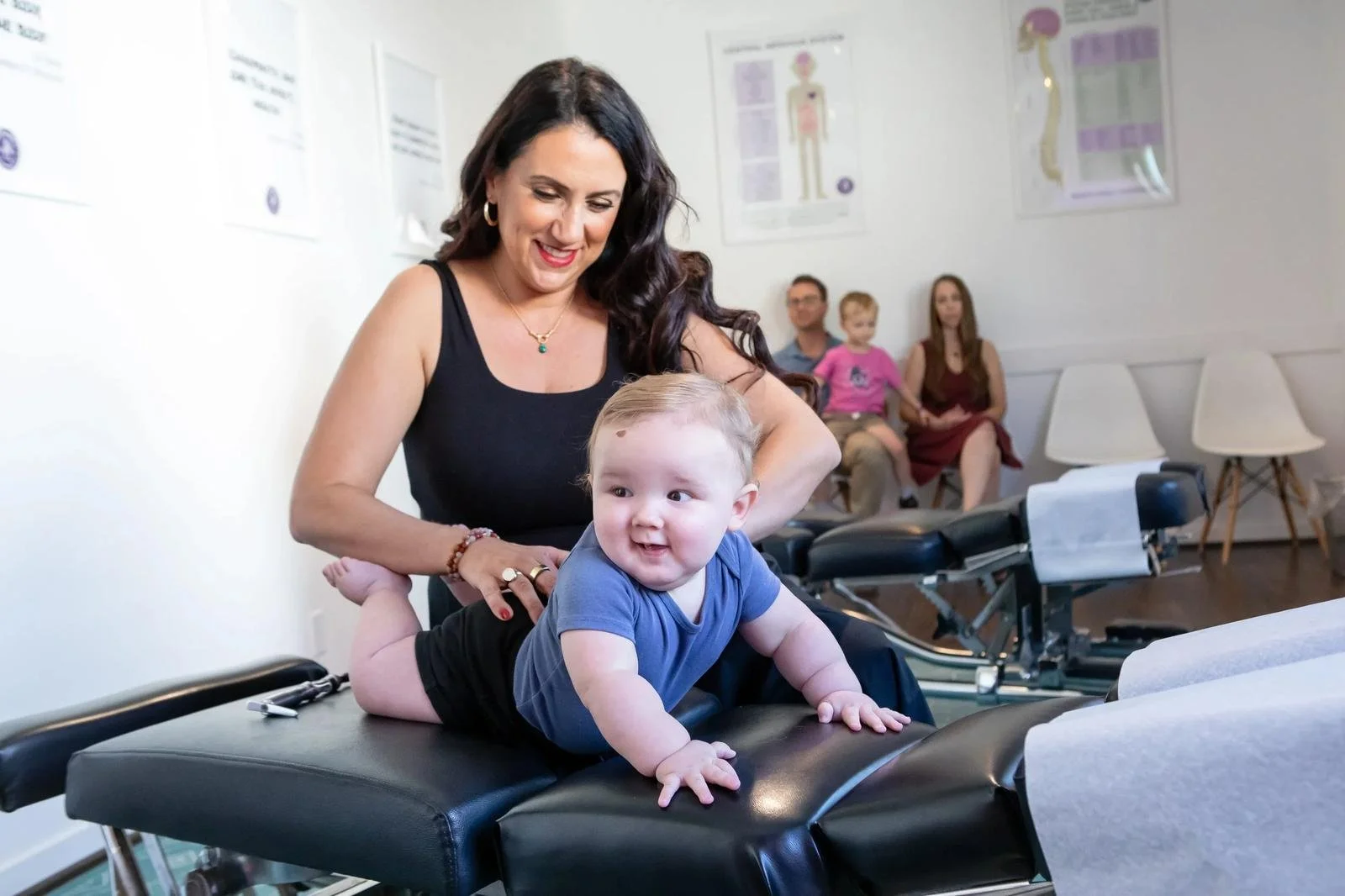
This is the most common question parents ask — and the answer almost always puts them at ease. An infant adjustment uses no more pressure than you'd comfortably apply to your own eyelid. There is no cracking, twisting, or forceful movement. The contact is light, precise, and typically lasts only a few seconds.
Most babies sleep through their adjustments. Many parents notice their baby seems calmer, feeds better, or sleeps more soundly within the first few visits.
For more on supporting your newborn at home, our tips for newborn chiropractic wellness cover what to watch for, signs to bring your baby in, and simple ways to nurture their development between visits.
When to Bring Your Baby In

We recommend a check-up within the first two weeks of life — especially if birth involved any intervention, if your baby is having feeding difficulties, or if you notice a head tilt, preference for one side, or unusual fussiness.
Beyond the early weeks, developmental milestones like lifting the head, sitting, crawling, and walking are all ideal times for a check-up, as each new stage places different demands on the spine and nervous system.
If your baby is struggling with specific challenges, these pages may be helpful:
Tongue tie support
Colic care
Torticollis
If you're a new mom recovering from birth, our postpartum chiropractic care supports your recovery while we care for your baby too.
Frequently Asked Questions
-
As early as the first day. Many families bring their newborns in within the first week or two. Dr. Adana adjusted their daughter at just six hours old.
-
Incredibly gentle — lighter than the pressure you'd use to test the ripeness of a piece of fruit. Most babies relax or fall asleep during the adjustment.
-
Difficulty latching or breastfeeding, excessive fussiness, poor sleep, a head tilt or preference for turning one direction, arching, reflux, and digestive discomfort are all signs that a chiropractic evaluation may be beneficial.
-
Yes. Feeding challenges often have a structural component — tension in the jaw, neck, or cranium can make latching difficult or painful. Gentle adjustments address these structural issues and often improve feeding mechanics. We also work collaboratively with lactation consultants when needed.